
Understanding Oxygen Therapy at The Neuro Therapy Place: A Simple Guide to the Science Behind It
Updated: May 2
Oxygen therapy has become a popular treatment option for various neurological conditions. At The Neuro Therapy Place, this therapy is used to support brain health and recovery. But what exactly is oxygen therapy, and how does it work? This post breaks down the science behind oxygen therapy in simple terms, helping you understand why it might be a helpful option.
First, What Is Oxygen Therapy?
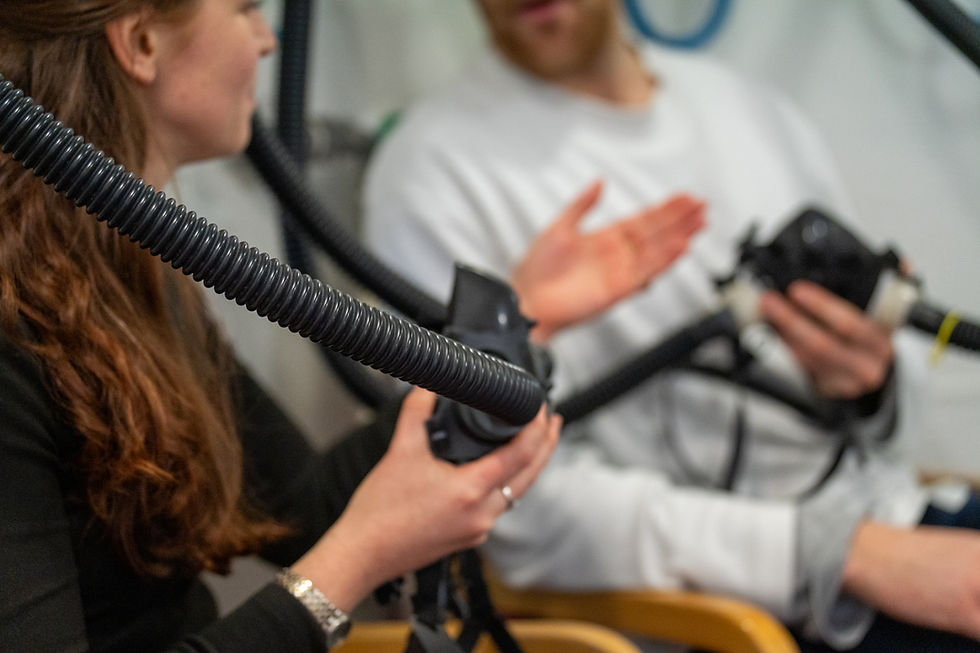
Oxygen Therapy (often called Hyperbaric Oxygen Therapy or HBOT) involves breathing oxygen in a specially designed chamber where the air pressure is slightly increased.
Normally, we breathe air that contains about 21% oxygen. During a session, you breathe oxygen at a higher concentration while the chamber is gently pressurised. It’s that combination — more oxygen + higher pressure — that makes the difference.
Why Pressure Matters
Under normal conditions, oxygen travels around your body attached to red blood cells.
However, your blood plasma (the liquid part of your blood) can also carry oxygen — but only small amounts at normal pressure.
When pressure increases inside the chamber, physics comes into play.
According to a basic gas law (Henry’s Law), when pressure increases, more gas can dissolve into liquid, which means the pressure is not a technical detail but part of the therapy itself.
In simple terms:
Higher pressure allows much more oxygen to dissolve directly into your blood plasma.
This means oxygen can travel further and reach areas of the body where circulation may be reduced or damaged.
After each session, as the body returns to normal pressure, cells temporarily experience what is called a ‘relative hypoxic signal’ essentially, they register the change as a drop in oxygen. This triggers the body’s own repair response. This is part of why repeated sessions build on each other over time.
Why This Is Important for Neurological Conditions
The brain is extremely sensitive to oxygen levels. Even small disruptions in oxygen supply — due to stroke, inflammation, injury, or chronic neurological disease — can affect how cells function.
In many neurological conditions, there may be:
Areas of reduced blood flow
Ongoing inflammation
Damaged but not completely dead cells
Tissue that is struggling, but potentially recoverable
By increasing oxygen availability, Oxygen Therapy aims to:
Improve oxygen delivery to compromised tissues
Support cellular energy production
Reduce inflammation
Encourage the body’s natural repair processes
What Happens at a Cellular Level?
Every cell in your body uses oxygen to produce energy. This happens inside structures called mitochondria — often described as the “power plants” of the cell.
More available oxygen can:
Increase cellular energy production (ATP)
Support tissue repair mechanisms
Help regulate inflammation
Promote the formation of new blood vessels (angiogenesis)
In neurological recovery, even small improvements in cellular efficiency can have meaningful functional effects over time.
Does Oxygen “Cure” Neurological Conditions?
It’s important to be clear: Oxygen Therapy is not a cure.
Neurological conditions such as MS, stroke injury, or Parkinson’s are complex and multi-factorial. Oxygen Therapy does not reverse underlying diagnoses.
However, many people use it as a supportive therapy to:
Improve energy levels
Support symptom management
Enhance overall wellbeing
Complement physiotherapy and rehabilitation#
Think of it as supporting the body’s internal repair systems rather than replacing them.
Why Multiple Sessions Are Often Recommended
The effects of Oxygen Therapy are cumulative.
While some people notice early improvements, for many individuals the benefits build gradually over repeated sessions. This is because tissue repair and neurological adaptation take time. Consistency matters.
Is It Safe?
When delivered by trained operators in a controlled environment, Oxygen Therapy has a strong safety record.
At The Neuro Therapy Place:
All sessions are overseen by trained Oxygen Operators
Strict safety protocols are followed
Volunteers support monitoring and client wellbeing
Clients are screened before beginning therapy
Safety is always our priority.
In Summary
Oxygen Therapy works by:
Increasing pressure in a controlled chamber
Allowing more oxygen to dissolve into the blood
Delivering enhanced oxygen to tissues
Supporting cellular energy, repair, and regulation
It uses basic principles of physics and biology to help the body function more efficiently.
For people living with neurological conditions, that additional support can make a meaningful difference in day-to-day life.
How to Get Started at The Neuro Therapy Place
If you are interested in oxygen therapy, The Neuro Therapy Place offers consultations to assess your condition and discuss treatment options. The team will explain how oxygen therapy might fit into your care plan and answer any questions.
Starting therapy involves:
A thorough evaluation of your medical history
Discussion of goals and expectations
Scheduling sessions tailored to your needs
The goal is to provide personalised care that supports your brain health safely and effectively.
